Guide · Pharmacy · Beauty Shopping series
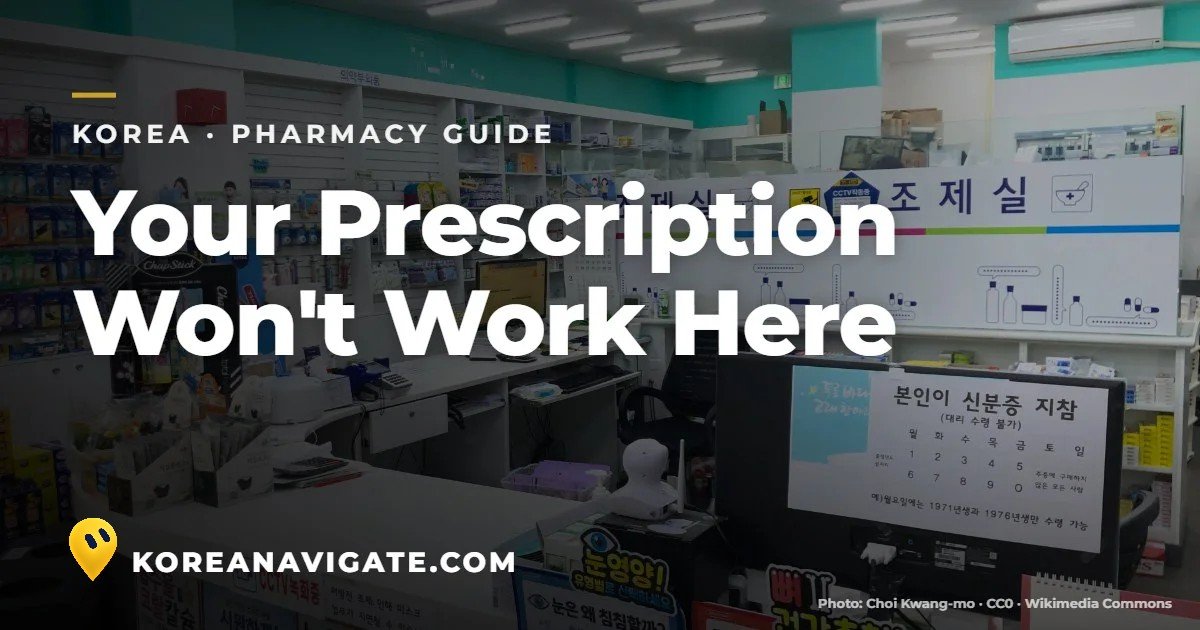
You can buy most medicine at a Korean pharmacy with no ID: just describe your symptoms. Antibiotics and prescriptions from home are the catch.
- No prescription
- Most over-the-counter medicineNo ID, no insurance, no Korean needed
- Prescription only
- Antibiotics, morning-after pillKorean doctor only · foreign prescriptions not accepted
- Hours
- Mon–Sat from about 9:00Many close on Sundays
- Late night
- Night pharmacies 22:00–01:00Convenience stores stock 11 basic items, 24 hours
- Prices
- Common items ₩4,000–10,000About $3–7
- Tax refund
- ₩15,000+ per receiptTax Free sign + your passport
A Korean pharmacy used to be where you went when something went wrong on a trip. In 2026 it is somewhere visitors plan to go. Pharmacies have overtaken convenience stores as the top shopping stop for foreign tourists in South Korea, and the draw is only partly medicine: pharmacy-only skincare, scar gels and pain patches that you cannot pick up at a regular beauty store fill the rest of the basket.
This guide covers both trips to the 약국 — the urgent one (fever at midnight, a stomach that lost an argument with raw seafood) and the shopping one — plus the two mistakes visitors keep making: assuming everything is over-the-counter, and assuming nothing is.
Pharmacy vs Olive Young vs Convenience Store
Three different shops, three different jobs. Mixing them up is the most common reason visitors leave empty-handed.
Pharmacy (약국)
Sells: OTC + prescription medicine, pharmacy-only skincare, pain patches, supplements
Doesn’t sell: Makeup, most big-brand cosmetics
Best for: Real medicine and pharmacist advice
Olive Young
Sells: Skincare, sunscreen, makeup, sheet masks
Doesn’t sell: Any medicine at all
Best for: Beauty shopping — see what to buy at Olive Young
Convenience store
Sells: 11 basic medicines on sale (fever, cold, digestion, patches), 24 hours
Doesn’t sell: Everything else medicinal
Best for: 2 a.m. emergencies only
The line that matters: anything classified as medicine — including some famous “beauty” creams — is legally pharmacy-only in Korea. If a viral product is a registered drug, no beauty store can sell it to you, which is exactly why pharmacies became a beauty destination.
What You Can Buy Without a Prescription
General OTC medicine (일반의약품) is sold to anyone who walks in. No passport check, no questions beyond your symptoms. The main categories:
Panpyrin (판피린) and Pancol are the household names — roughly ₩5,000–8,000 a box.
Tylenol (acetaminophen) and Korean brands like Penzal Q, ₩4,000–8,000. Children’s fever syrup comes in single-dose stick packs that travel well.
Gas Hwalmyeongsu (가스활명수), a herbal digestive drink sold since 1897, plus tablet antacids and probiotics, ₩4,000–10,000.
Zyrtec and Clarityn equivalents, ₩6,000–10,000.
Madecassol centella ointment (₩4,500–5,000 for a small tube), antiseptics, bandages, hydrocolloid patches.
Ketoprofen patches such as Ketotop — a fixture of Korean households for stiff necks and sore backs.
Many low-dose brands are OTC in Korea (about ₩6,000–15,000 a pack) — but read the next section before you rely on that.
Prices vary a little by store and neighborhood; the ranges above are what Seoul pharmacies typically charge. Nothing on this list needs insurance, and foreigners pay the same shelf price as locals.
What Needs a Prescription (and What to Do Instead)
Korea separates prescribing and dispensing strictly: doctors prescribe, pharmacies dispense, and a pharmacy cannot sell you prescription-only medicine (전문의약품) on request. The ones that catch travelers out:
Prescription only, no exceptions.
The morning-after pill is prescription-only in Korea, unlike in many countries where it recently moved over the counter. You need a quick visit to an OB-GYN clinic (산부인과) or an emergency room first; timing matters, so do not leave it.
Prescription only, and some are controlled substances you also cannot casually import.
A foreign prescription cannot be filled in Korea. Bring your full supply in your carry-on.
The good news: the workaround is cheap and fast by design. A walk-in neighborhood clinic (의원) visit is quick, and with the prescription in hand any pharmacy fills it in minutes. If you are unsure where to go, call 1330 (Korea Travel Hotline, English, 24 hours) or 120 in Seoul. For anything serious, call 119.
How Buying Works: Ask the Pharmacist
Do not expect to browse medicine aisles. Most OTC products sit behind the counter, so the transaction is a short consultation: describe the symptom, the pharmacist selects a product, explains the dose, and charges you. It takes two minutes and the advice is free.
- Describe the symptomPoint, mime or show the phrase below. No ID is needed.
- The pharmacist picks a productMost medicine sits behind the counter, so you don’t browse.
- Listen for the doseThe pharmacist explains how much and how often. The advice is free.
- PayThe whole visit takes about two minutes.
Language is rarely a real barrier if you prepare one of these:
Tap copy, then show the pharmacist
Two habits help more than perfect Korean: show the generic ingredient name of what you use at home (acetaminophen, ibuprofen, cetirizine — pharmacists work from ingredients, not foreign brand names), and show a photo of the product if you are hunting a specific viral item. If you take other medication or are pregnant, say so — the pharmacist is required to check interactions, and this consultation is the safety step that replaces self-service shelves. For unpacking the Korean category labels themselves, see our guide to reading a Korean beauty store.
Hours, Sundays and Late-Night Options
- Regular pharmacies typically open around 9:00 and close between 18:00 and 21:00. Tourist-area and station pharmacies run later; many neighborhood ones close on Sundays.
- Sunday and holiday duty pharmacies (휴일지킴이약국) rotate so every district keeps some open. Search “휴일지킴이약국” or check the pharm114 directory before you set out.
- Public night pharmacies (공공심야약국) are city-designated stores that stay open 22:00–01:00. Most open every day of the year, but some only on set weekdays, so check before you go. In Seoul, the Smart Seoul Map has an English “public late-night pharmacy” layer; in Naver Map, searching 심야약국 works too.
- Convenience stores are the true 24-hour fallback: GS25, CU and 7-Eleven stock a short government-approved list — fever reducers, cold medicine, children’s fever syrup, digestive drinks and pain patches. Enough to get through the night, nothing more.
- Seoul’s 120 Dasan Call Center answers in English around the clock and will tell you the nearest open pharmacy — and whether it has English-speaking staff.
Copy, then paste into Naver Map
Tax Refunds at Pharmacies
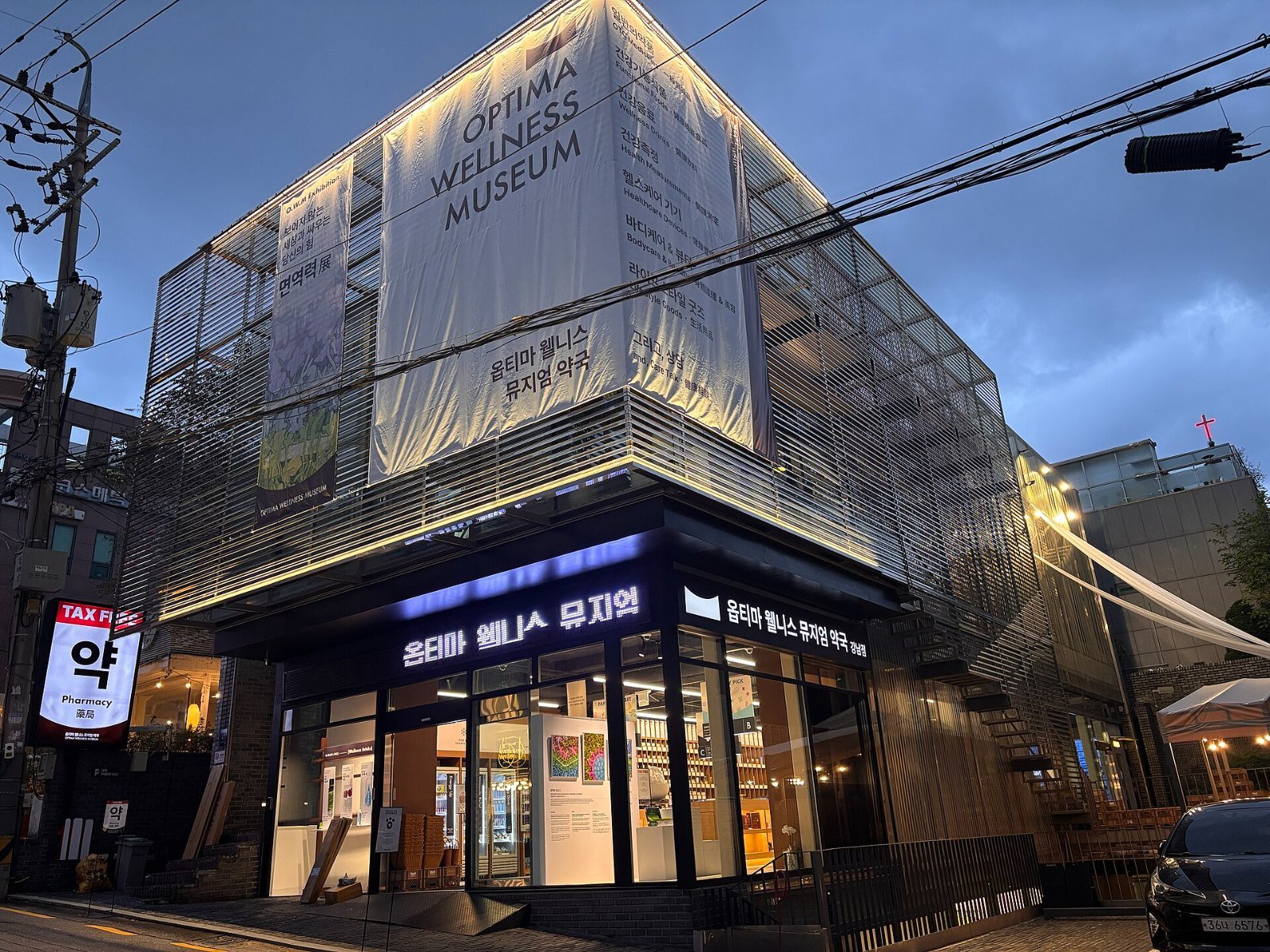
Look for the blue Tax Free sign by the door or till: registered pharmacies process refunds the same way beauty stores do. Show your physical passport at checkout on a single receipt of ₩15,000 or more and the VAT is deducted on the spot for purchases under ₩1,000,000 per receipt. Goods must leave Korea within three months, and the instant-refund total across your trip is capped at ₩5,000,000 — the full mechanics are in our Korea tax refund walkthrough.
Two practical notes. Not every pharmacy participates — small neighborhood stores often don’t, while the big tourist-area pharmacies in Myeongdong, Seongsu and Hongdae almost expect the question. And put the whole basket on one receipt: refund amounts step up by receipt total, so three small receipts earn less than one combined one. Refunds are most straightforward on skincare and other retail goods; if medicine is on your receipt, ask at the counter whether it qualifies.
What Tourists Actually Buy
The shopping basket that made pharmacies a trend looks like this:
- Centella and “regenerative” creams — pharmacy-grade wound and skin-repair creams (Madecassol is the classic) that beauty stores cannot stock because they are registered medicines. These are the items KED Global describes as selling “by the box” to visitors.
- Scar and acne spot gels — products like Noscarna gel and Acnon cream are OTC drugs in Korea, sold only at pharmacy counters, and priced far below clinic alternatives.
- Ketoprofen pain patches — for hikers, shoppers and anyone whose feet have opinions about Seoul’s hills.
- Digestive drinks and hangover remedies — the morning-after shelf is a Korean institution; pharmacists will point you to the right bottle in seconds.
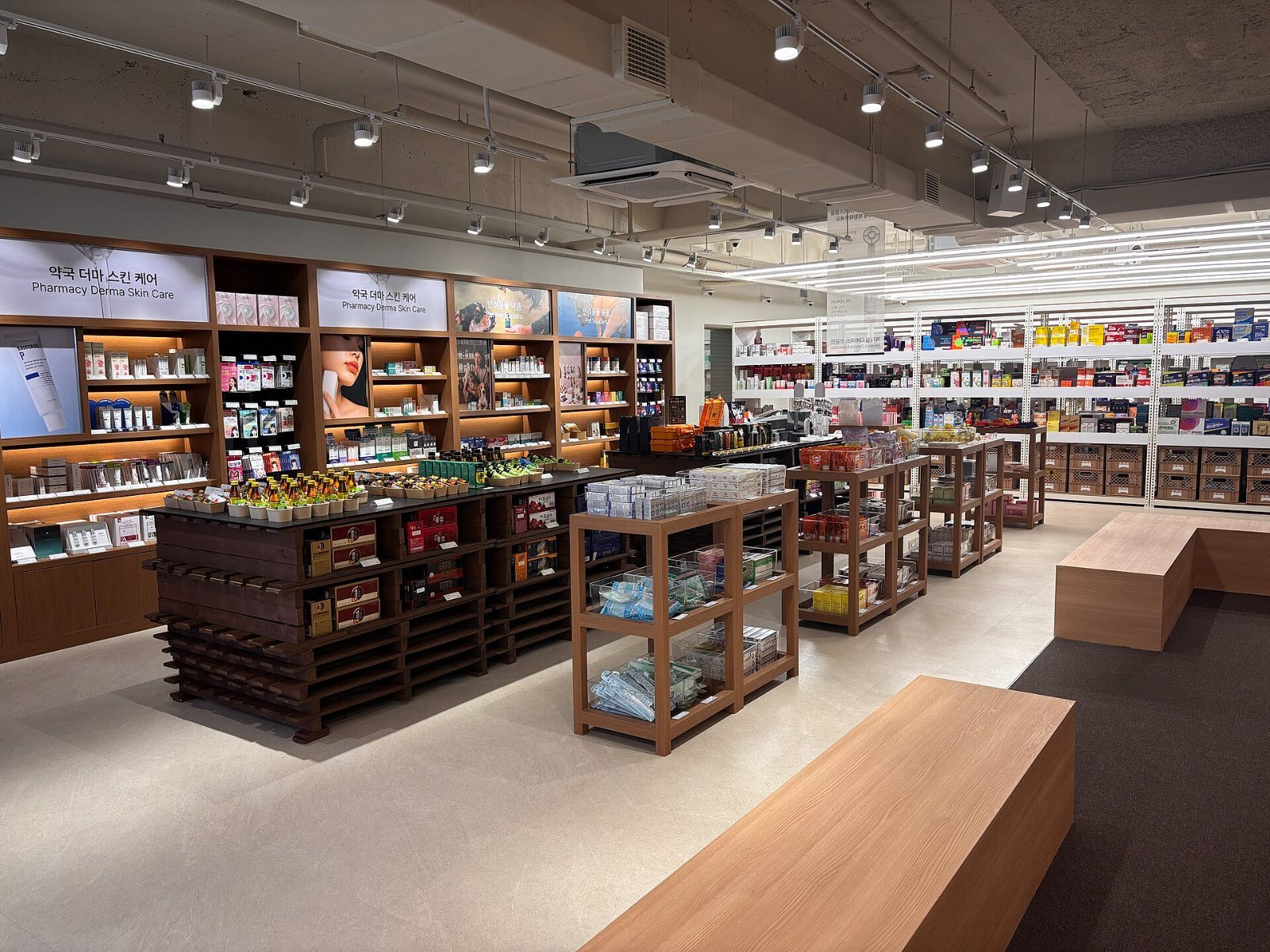
- Korean supplements — red ginseng, probiotics and vitamins, often cheaper at pharmacies than at souvenir shops, with a pharmacist to ask about dosage.
One caution that applies to the whole basket: pharmacy skincare is still medicine. Check the leaflet, respect the stated dose, and be careful with social-media dosing hacks — the pharmacist in front of you is a better source than a 15-second video.
Practical Info
Find a pharmacy near you
Show this in Korean
Search in Korean on Naver Map for the most complete results; Google Maps in Korea shows places but not walking directions yet.
FAQ
Can foreigners really just walk in and buy medicine?
Yes. OTC purchases need no ID, no insurance and no Korean address. Only prescription dispensing involves paperwork, and that is the doctor’s prescription, not your nationality.
Do pharmacists speak English?
In tourist districts, usually enough for symptoms and dosage — and the 120 call center can identify stores with English-speaking staff. Elsewhere, the phrase table above plus an ingredient name on your phone screen gets the job done.
Is medicine cheaper in Korea?
Common OTC items are inexpensive by US and European standards (₩4,000–10,000 covers most basics), and pharmacy skincare is typically priced well below the same brands’ overseas listings — one reason visitors stock up.
Can I get a prescription from home refilled?
No. Korean pharmacies can only dispense against a Korean doctor’s prescription. Bring your full supply, and carry a copy of your prescription in case you need a local clinic to re-issue it.
More in this series: Korea Tax Refund for Beauty Shopping · How to Read a Korean Beauty Store · What to Buy at Olive Young
Sources
- Korea JoongAng Daily (Jun 21, 2026): Korea weighs expanding OTC medicines at convenience stores (11 products on sale now). Checked 2026-10-30.
- Sateconomy (Sep 10, 2025): Convenience-store medicines (13 designated, 11 actually on sale after two children’s Tylenol products were discontinued). Checked 2026-10-30.
- Seoul Metropolitan Government (Jan 29, 2026): Public late-night pharmacies (22:00–01:00; 39 in Seoul, 28 open all year). Checked 2026-10-30.
- Daily Pharm (May 20, 2016): Emergency contraception stays prescription-only (MFDS decision). Checked 2026-10-30.
- Korea JoongAng Daily (Aug 29, 2012): Prescription rule stays in effect for morning-after pill (earlier decision; the 2016 review above kept it). Checked 2026-10-30.
- Wise: VAT refund in South Korea (₩15,000 minimum, instant refund under ₩1,000,000 per receipt, ₩5,000,000 trip cap, 3-month export rule). Checked 2026-10-30.
2 thoughts on “Korean Pharmacy Guide for Tourists: What to Buy & How It Works”