
Korea · Winter skincare · Packing
Bring the products your skin already trusts, and buy the heavy moisture layers in Korea, where they’re cheaper and made for this climate.
- Bring
- The products your skin already trusts
- Buy in Korea
- Heavy moisture layers: cheaper, made for this climate
- When
- First 48 hours: Olive Young plus a pharmacy
- Hotel room
- Humidity hacks for dry heated air
- Avoid
- Starting a new 10-step routine on the trip
Every winter, visitors from milder climates — and especially from humid ones — run into the same surprise: skin that behaved all year at home starts flaking, tightening and stinging within days of landing in Seoul. It is not your products failing. It is physics. Here is how Korean winter works on skin, and the packing split that handles it: the trusted half travels with you, the heavy half you buy here.
Why Korean Winter Is a Skincare Problem
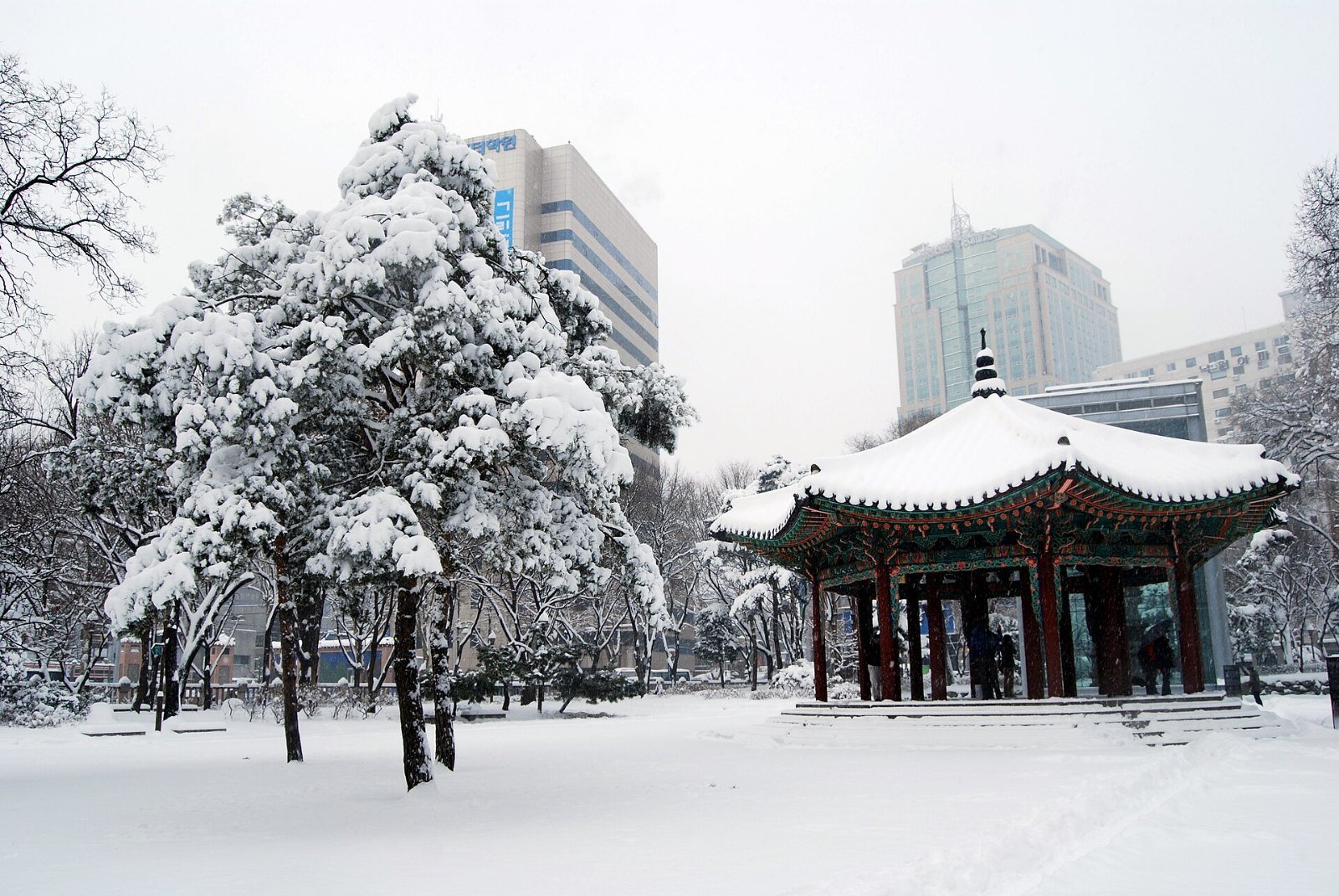
- Outside: December to February in Seoul means daytime highs around 0–5°C, nights well below freezing (January averages about −2°C), and a dry continental wind that strips moisture on every walk between subway and hotel.
- Inside: Korean buildings heat with ondol floor heating and run warm — and very dry. Hotel rooms and cafés can feel like the opposite problem from the street, and your skin pays for both, twice a day.
- The swing is the stress: hot-dry → cold-dry → hot-dry is harder on a skin barrier than steady cold. Tightness after washing, makeup cracking by afternoon, lips splitting by day three — that is the standard itinerary.
Busan and Jeju are milder but windier; the same logic applies with the volume turned down. The November events guide covers the week-by-week cooldown if your trip is on the season’s edge.
The Rule: Bring Your Actives, Buy Your Moisture
Split the bag by one question — “if this irritates me, does it ruin the trip?” Products with active ingredients and anything prescription-adjacent are tested by your skin over months; winter in a foreign country is the worst place to audition replacements. Moisture products, by contrast, are low-risk, bulky to fly with, and Korea’s home specialty: ceramide creams, sleeping packs and lip care engineered for heated-room winters, at prices below what the same categories cost in the US or Europe — and liquids over 100 ml cannot ride in your carry-on anyway.
Pack These From Home
| Bring | Why |
|---|---|
| Your regular actives (retinoid, vitamin C, acids) | Your skin’s tolerance is trip insurance; winter is not the time to re-test |
| Prescription skin medication | A foreign prescription cannot be refilled in Korea — full supply, in your carry-on |
| Your gentle cleanser | The one product that touches your face twice a day; decant under 100 ml |
| Sunscreen you already like | Winter UV plus snow glare is real; a backup tube is cheap to buy here if you run out |
| One occlusive balm (petrolatum-type) | The emergency seal for wind-burned cheeks and lips until you shop |
| Any product your skin is picky about | “Picky” = you have reacted to alternatives before. That history travels with you |
Buy These in Korea (First 48 Hours)
| Buy | Where | Typical price |
|---|---|---|
| Ceramide / barrier cream — the heavy winter one | Olive Young | ₩15,000–35,000 |
| Sleeping pack (overnight moisture mask) | Olive Young | ₩10,000–25,000 |
| Sheet masks, a stack | Olive Young | ₩1,000–3,000 each |
| Lip balm + lip sleeping mask | Olive Young | ₩4,000–12,000 |
| Hand cream and body lotion | Olive Young / Daiso | ₩3,000–12,000 |
| Centella repair ointment (Madecassol-type) | Pharmacy — counter only | ₩4,500–5,000 |
| Hydrocolloid patches, wound basics | Pharmacy | ₩3,000–6,000 |
Shopping notes: Olive Young staff will steer you to the winter displays the moment the temperature drops — our Olive Young buying guide sorts the shelves by skin goal, and the label decoder shows you how to check ingredients and categories yourself. Pharmacy-only items like centella ointment live behind the counter — the pharmacy guide covers how to ask. Keep the receipts together: beauty purchases of ₩15,000+ per receipt qualify for instant tax refunds with your passport (mechanics in the tax refund walkthrough).

The First-48-Hours Plan
- Night one, before you shop: cleanse gently, actives as usual, moisturizer, then the occlusive balm on cheeks, nose edges and lips. Run the shower hot for five minutes with the bathroom door open, or hang a damp towel near the bed — hotel air is the first night’s real opponent. If your room has a humidifier (many Korean hotels stock them), fill it before bed, not after your skin complains.
- Day one or two: one Olive Young run and one pharmacy stop cover the whole “buy” table. Ask for ceramide (세라마이드, seramaideu) on the label if you are choosing alone.
- From night two: moisturizer, then sleeping pack on top every other night; sheet mask on the worst day, not every day. Lips get balm before every outing — wind finds them first.
Three Winter Mistakes to Skip
- Debuting a whole new routine. A 10-step haul is a souvenir, not a regimen. Introduce one new product at a time, days apart — if something stings, you should know which one it was.
- Exfoliating on a summer schedule. Dry cold plus acids plus retinoids is how barriers break. Halve the frequency, keep the products.
- Hot-water washing. It feels like the answer to frozen cheeks; it is the cause of half the tightness that follows. Lukewarm, short, moisturize within a minute of patting dry.
Practical Info
Find an Olive Young near you
- Help line
- 1330 Korea Travel HotlineEnglish, 24 hours
Show this in Korean
Search in Korean on Naver Map for the most complete results; Google Maps in Korea shows places but not walking directions yet.
FAQ
My skin is oily — do I still need the heavy cream?
Yes, but aim it: gel-cream on the T-zone, the heavy ceramide cream on cheeks and jaw. Winter dryness in Korea hits combination skin unevenly, exactly like that.
Can I just buy everything after landing?
Mostly — except prescriptions and the actives your skin already trusts. Those two categories are the whole reason the “bring” list exists.
Is tap water part of the problem?
Korean tap water is safe and not unusually harsh; the tightness visitors feel is the hot-dry/cold-dry swing, not the water. Shorter, cooler washes fix most of it.
What about kids’ skin?
Same physics, thinner barrier: bring their usual products, add the occlusive balm and lip care, and use the pharmacy stick-pack basics if anyone gets feverish — pharmacies stock children’s lines at the counter.
More in this series: What to Buy at Olive Young · Korean Pharmacy Guide for Tourists · Korea Tax Refund for Beauty Shopping
1 thought on “Korea Winter Skincare Packing: What to Bring vs Buy There”