Korea · Safety · Tourist scams
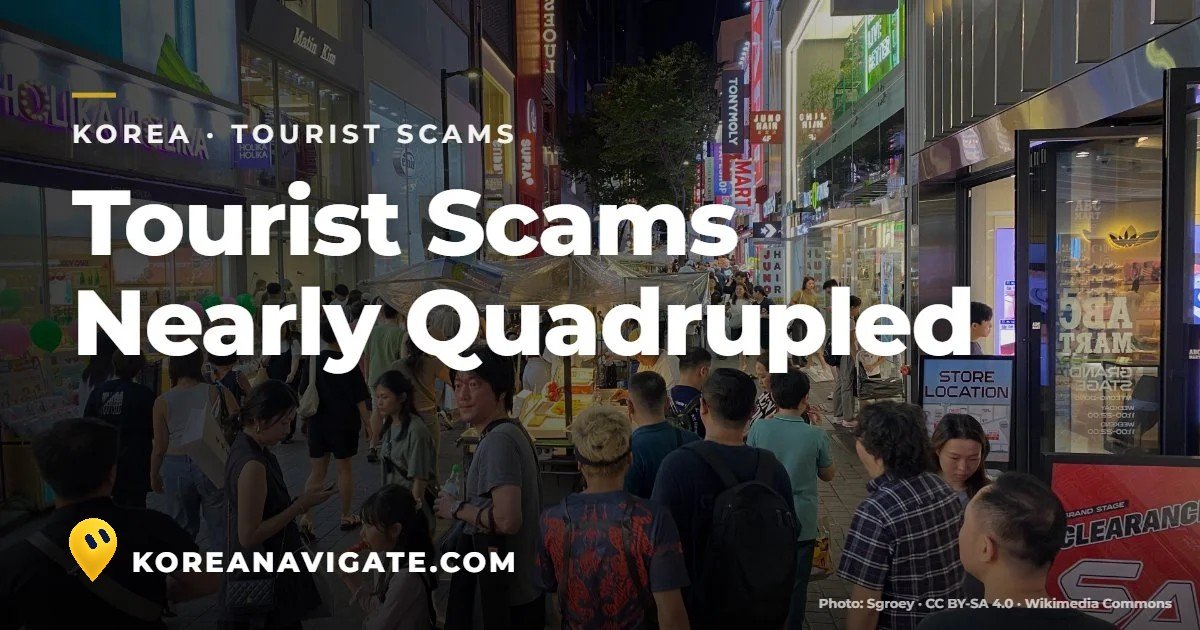
Korea is one of the safest countries for violent crime, but scams aimed at tourists nearly quadrupled in two years. Most are easy to avoid.
- Victims
- 5,307 in 2023 → 19,907 in 2025
- Taxis
- Ride with the meter on, or book with a taxi app
- Cosmetics
- Bait-and-switch in Myeongdong: buy where prices are tagged
- Markets
- Price gouging: buy where prices are tagged
- K-pop merch
- Fakes are common
- Always
- Keep every receipt
- Help
- 1330 tourist hotline
- How bad are tourist scams in Korea, really?
- The 6 most common scams targeting tourists in Korea
- What is Korea actually doing about this?
- What should I do if I get scammed?
- FAQ
- Your anti-scam checklist
Here’s the paradox every Korea travel forum dances around: Korea is genuinely one of the safest countries on earth. You can leave your laptop on a café table, walk home at 2 a.m., and lose your wallet only to have it turned in with the cash intact. Violent crime against tourists is extraordinarily rare.
But there’s a different kind of crime that has exploded — the kind that doesn’t make you feel unsafe, just overcharged. In June 2026, a Korean lawmaker revealed that foreign victims of fraud in Korea had nearly quadrupled in two years. Tourist complaints about overcharging, pushy sales tactics, and confusing pricing jumped 71% in a single year, according to the Korea Tourism Organization. And in September 2026, the government launched its biggest-ever crackdown on tourist price gouging, with mystery shoppers, on-the-spot QR reporting, and business suspensions from the first offense.
This guide isn’t meant to scare you. It’s meant to do what nobody else does: name the actual scams, show you exactly how each one works, and give you a defense playbook for each. Ten minutes of reading now saves you real money later.
How bad are tourist scams in Korea, really?
Let’s put numbers on it before the anecdotes.
- 19,907 — foreign victims of fraud in Korea in 2025, up from 5,307 in 2023, per National Police Agency data released by Rep. Kim Joon-hwan in June 2026 (Korea JoongAng Daily).
- 1,543 — formal complaints filed by foreign tourists in 2024, a 71% jump from the year before, per the Korea Tourism Organization. Overcharging, aggressive sales tactics, unclear pricing, and poor service topped the list.
- 12,806 — public reports of tourism price and service violations reviewed by the government through August 2026, leading to 296 well-rated businesses being listed on an official Tourism Safety Map (Ministry of Culture, Sports and Tourism, September 2026).
Two things are true at once. First, the trend is real and steep — and it tracks the tourism boom itself: foreign visitors jumped from 11 million in 2023 to 18.9 million in 2025, with independent travelers (no guide, no tour operator) now the large majority. Traveling without a local fixer makes you more exposed to every pricing trick in the book.
Second, perspective matters. Even at 19,907 fraud victims, that’s roughly one victim per thousand visitors — and the overwhelming majority of cases are financial, not physical. Nobody is going to mug you in Hongdae. The realistic worst case is paying triple for a taxi ride or leaving Myeongdong with the wrong face cream. This guide is about keeping that from happening.
The 6 most common scams targeting tourists in Korea
Here’s the full lineup, roughly ordered by how often travelers actually encounter them:
| Scam | Where it happens | Typical damage |
|---|---|---|
| Taxi overcharging | Anywhere, worst late at night near nightlife areas | ₩10,000–40,000 extra per ride |
| Cosmetics bait-and-switch | Myeongdong beauty stores | ₩30,000–100,000+ for wrong products |
| Market & street-food overcharging | Gwangjang Market, traditional markets | ₩2,000–10,000 per transaction |
| Fake K-pop merchandise | Concerts, street vendors, online | Full payment, no goods (or fakes) |
| Currency exchange traps | Street touts, unlicensed booths | 5–15% lost on bad rates and fees |
| No-price-tag shops | Tourist shopping streets | Paying 2–3x the real price |
Let’s break each one down — how it works, and the exact countermove.
1. Taxi overcharging: the meter is everything
This is the single most reported tourist scam in Korea, and it comes in several flavors:
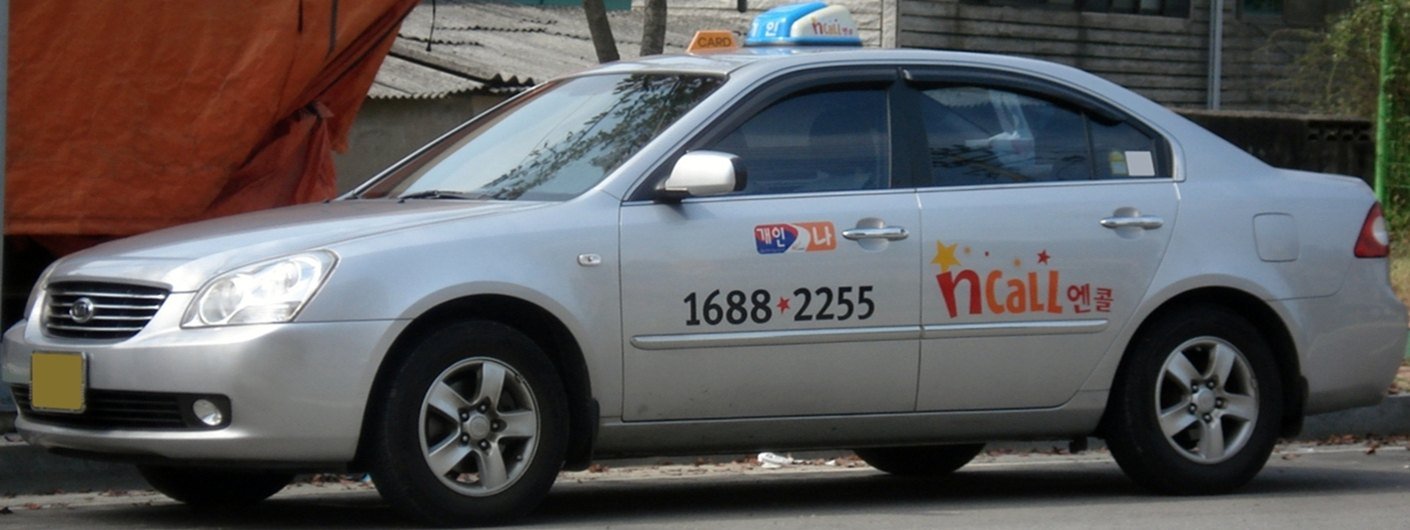
- The meter stays off. The driver quotes a flat price that’s two to four times the metered fare. In September 2025, Japan’s TBS News Dig caught this on camera: reporters posing as tourists were quoted ₩45,000 for a Myeongdong→Hongdae ride — the normal metered fare is about ₩12,000 — with the meter switched off and the driver’s license covered. In August 2026, a KBS undercover run found the same pattern: a Myeongdong hotel→Namsan Tower ride quoted at ₩20,000 against a normal ₩7,000, and Namsan→Hongdae at ₩50,000 against roughly ₩13,000.
- The scenic route. The meter runs, but the driver takes a long detour. Hard to detect if you don’t know the city.
- The lost-item ransom. In one case from the KTO’s complaint data, a Singaporean traveler who left a phone in a taxi was told it would cost ₩500,000 (about $350) to get it back. Under Korean law, that demand would only be legal if the phone were worth over ₩2.5 million.
Your defense playbook:
- Use a taxi app. Kakao T (choose “Pay to Driver” and pay by card in the car), k.ride (built for foreigners, foreign cards accepted), or Uber. App rides create a digital trail and standardize the fare.
- If you hail on the street, the meter goes on — no exceptions. A driver who refuses the meter or insists on a flat price: get out and take the next cab. This is the entire rule.
- Know the real late-night surcharge so you don’t mistake it for a scam. Seoul’s official schedule: 10:00–11:00 p.m. +20%, 11:00 p.m.–2:00 a.m. +40%, 2:00–4:00 a.m. +20%. Base fare is ₩4,800 for the first 1.6 km. A ₩10,000 daytime ride legitimately costs ₩12,000–14,000 at night. Before getting in, look up your route in Naver Map so you know the expected fare and route.
- Always take the receipt. It has the taxi’s license number and the fare breakdown — it’s your evidence if you need to report.
- Black “deluxe” (mobeom) taxis are premium, not a loophole. They cost more (base fare ₩7,000 for 3 km as of 2026), and a 20% late-night surcharge (10 p.m.–4 a.m.) applies to them too — the old advice that deluxe taxis skip night surcharges is outdated. Don’t get in one assuming it’s exempt.
2. The Myeongdong cosmetics bait-and-switch
In April 2026, KBS’s investigative program Field K caught this one on camera. At franchise stores of a famous beauty brand in Myeongdong, staff told foreign shoppers that unfamiliar products on the shelves were “from the same company” or “an affiliate” of the brand — one employee claimed an Etude store’s products were “under Amorepacific.” They were completely unrelated products. The kicker: both stores were owned by the same person — who was also the CEO of the company making the substitute products. A Japanese victim told KBS she walked in because of the brand sign, was handed a business card, and “felt betrayed.”
The pattern to watch for: free samples and aggressive staff steering you away from the product you asked for toward something “better” or “buy one, get one free.”
Your defense playbook:
- No price tag, no purchase. Under Korea’s Cosmetics Act, every cosmetic item must display its price. Seoul runs mystery-shopper crackdowns on Myeongdong stores specifically for this. A missing price tag is a red flag — walk out.
- Buy the brand you came for. If staff push a different product, that’s the moment to leave, not to negotiate.
- Prefer Olive Young and official brand stores over small franchise shops with handwritten signs.
- Check the seal and the receipt before you leave the store. Photograph both if anything feels off.
3. Market and street-food overcharging
Traditional markets are a highlight of any Korea trip — and the place where “foreigner pricing” is most blatant. The cases that made national news in 2026:
- A Gwangjang Market stall charged ₩10,000 for an ₩8,000 order of sundae after adding meat the customer never ordered.
- Tourists were charged ₩2,000 for drinking water that’s free everywhere else in Korea.
- Seoul deployed Korean and foreign mystery shoppers across Gwangjang Market in 2026, and the district introduced a vendor real-name system with penalty points leading to suspension.
The good news: the crackdown has teeth now. Since September 1, 2026, a restaurant caught overcharging or hiding its prices faces a five-day business suspension on the first offense (10 days on the second, 20 on the third) — previously just a warning.
Your defense playbook:
- Confirm the price before you order or eat. Point at the menu, point at the food, confirm the number. Thirty seconds of awkwardness beats a surprise bill.
- Check the bill against the posted menu before paying. Photograph the menu when you sit down.
- Water is free. If a restaurant charges for basic water, that’s a red flag about everything else.
4. Fake K-pop merchandise
K-pop’s global boom created a scam economy around it. Per the 2026 police data, scammers specifically approach foreign fans — around concerts is prime hunting ground — offering merchandise for popular groups, then disappearing once paid. During one BTS concert weekend in Busan, three of the five reported crimes against foreigners were merch scams.
Your defense playbook:
- Buy merch at official stores, concert venues, and the groups’ official online shops. Street vendors selling “official” goods at a discount are selling fakes.
- Never pay a stranger in advance for tickets or goods, in person or online. This is also how concert ticket scams work. — see our KBO ticket guide
- If the price is far below official, it’s fake. There are no secret discounts on official K-pop merchandise.
5. Currency exchange traps
Less dramatic than the others, but it quietly eats 5–15% of your money. The traps: street touts near tourist areas offering “no commission” rates that hide terrible spreads, and unlicensed booths with no posted rates.
Your defense playbook:
- Use licensed exchange booths or banks — Myeongdong’s licensed booths are famously competitive, which is exactly why touts cluster nearby to intercept you first.
- Check the rate against a live converter before handing over cash. If the booth’s rate is more than ~2% off the mid-market rate, walk to the next one.
- Count your won before leaving the counter. Every time.
6. Shops with no price tags
This one underlies several scams above, so treat it as a universal rule: in Korea, legitimate retail displays prices. It’s legally required for cosmetics and increasingly enforced for food. A shop with no visible prices in a tourist area is telling you exactly how it does business.
What is Korea actually doing about this?
It’s worth knowing, because it affects your options as a traveler. The September 2026 crackdown package includes:
- QR-code reporting at tourist sites and festivals — scan, file, and your report routes automatically to the local government hotline and the KTO’s 1330 complaint center.
- First-offense business suspensions for restaurants (since Sept 1, 2026) and lodging businesses (since July 14, 2026) caught overcharging or hiding prices.
- Mystery shoppers, including foreigners, deployed in Myeongdong and Gwangjang Market.
- Hotel rating reform (July 2026): the price-gouging penalty tripled from 10 to 30 points — enough to cost a hotel its star rating. This followed 200–300% room-price spikes during the BTS Busan concerts.
The system is on your side. Use it.
What should I do if I get scammed?
Act fast — evidence goes stale and vendors count on you flying home. In order:
- Keep everything. Receipts, photos of menus and price tags, the product itself, screenshots of chats. Photograph the taxi’s license plate and receipt.
- Call 1330, the Korea Travel Hotline. Run by the Korea Tourism Organization: dial 1330 inside Korea or +82-2-1330 from abroad. English support is 24/7, and they handle tourist complaints — including overcharging and scams — plus live interpretation if you need to argue it out with a vendor on the spot. You can also reach them by chat through KakaoTalk, LINE, Facebook Messenger, or the VISITKOREA website.
- Scan the QR code if you see one at the attraction or festival — it files your report directly with the authorities.
- For crimes (theft, fraud, threats), call 112 — the police line, with three-way interpretation available. For emergencies, 119.
- If you paid by card, contact your card issuer about a chargeback once you have a police or 1330 report number.
One thing to know: 1330 can mediate and document, but getting cash back on the spot depends on the vendor cooperating. Your realistic best outcomes are a mediated refund, an official complaint on record (which feeds the crackdown system), and evidence for a chargeback.
Practical Info
Show this in Korean
Save these numbers before you land. 112 and 119 work from any phone in Korea.
FAQ
Is Korea safe for tourists?
Yes — for violent crime, Korea is among the safest countries in the world. The realistic risks are financial: overcharging and tourist-targeted fraud, which have risen sharply with the tourism boom. Standard big-city awareness plus the playbooks in this guide covers it. Wondering about a specific region? See our Jeju safety timeline for a date-by-date breakdown.
What number do I call if I get scammed in Korea?
Call 1330 (Korea Travel Hotline, English 24/7) for tourist complaints including overcharging and scams. For crimes like theft or fraud, call 112 (police). For medical or fire emergencies, 119.
Do I need to tip in Korea?
No. Korea has no tipping culture — not in restaurants, taxis, or hotels. One source of confusion: food delivery apps show a “delivery tip” (배달팁), but that’s a fixed logistics fee, not a gratuity. Anyone demanding a tip is running a scam.
Are taxis in Seoul safe for foreigners?
Overwhelmingly yes — the issue is overcharging, not safety. Use Kakao T, k.ride, or Uber; if hailing on the street, insist the meter runs. Know the late-night surcharge schedule (up to +40% from 11 p.m. to 2 a.m.) so you don’t mistake a legal fare for a scam.
How do I report a taxi driver who overcharged me?
Keep the receipt (it has the license number), note the time and route, and call 1330 or file through the QR reporting system. For serious cases, report to the police at 112.
Can I get a refund if a shop scammed me?
Sometimes — 1330 can mediate on the spot by phone, which works best while you’re still at the shop. After the fact, your receipt plus photos plus a 1330/police report gives you the basis for a credit card chargeback.
Is bargaining normal in Korea?
Not in regular retail — prices are fixed. Light haggling happens at traditional markets for bulk or cash purchases, but a vendor who opens with an absurd price for a foreigner isn’t inviting negotiation; they’re testing you. Walk away.
Are the crackdowns actually working?
Early signs are positive: 12,806 public monitoring reports reviewed through August 2026, 296 compliant businesses listed on the official Tourism Safety Map, and first-offense suspensions now in force for restaurants and lodging. But enforcement is concentrated in hotspots like Myeongdong and Gwangjang Market — stay sharp everywhere else.
Your anti-scam checklist
Save this to your phone before you fly:
- Save 1330 in your contacts — Korea Travel Hotline, English 24/7 (dial 1330 in Korea, +82-2-1330 from abroad).
- Install a taxi app — Kakao T or k.ride — before you need one at midnight.
- Learn the surcharge schedule — up to +40% from 11 p.m. to 2 a.m. is legal; a driver who won’t use the meter is not.
- No price tag, no purchase. It’s the law for cosmetics, and a red flag everywhere else.
- Photograph menus when you sit down at markets and street stalls.
- Keep every receipt — taxi, shop, restaurant. They’re your evidence.
- Buy K-pop merch only from official stores and venues.
- Exchange currency at licensed booths and count your won at the counter.
Korea is a wonderful, overwhelmingly safe place to travel. The scams exist, the government is finally cracking down hard, and now you know every move in their playbook — and every move in yours.
Scam tactics evolve. If you encounter a new one, the 1330 hotline wants to hear about it — your report feeds the monitoring system that protects the next traveler. Last updated September 30, 2026.
8 thoughts on “Tourist Scams in Korea: What Actually Happens to Foreigners (2026)”