

Korea · Marathons · Entry rules
Foreigners can enter all of Korea’s big races, but each one lets you in a different way.
The 2026 Busan Sea Marathon (October 25) has passed. Use the entry rules below to plan for the 2027 races.
- Seoul (March)
- First come, first served; US$150Sub-5-hour marathon certificate required
- JTBC Seoul
- Overseas entries via World’s Marathons
- Gyeongju
- English registration site
- Busan Sea
- Sells out in days
- Bib pickup
- In person with your passport; no race-day pickup
Tokyo has its lottery. Berlin has its ballot. Korea’s major marathons play by different rules — and the rules change from race to race, which is exactly what trips foreign runners up. One of Seoul’s two big marathons wants proof you can run a sub-five-hour marathon before it will sell you a bib. The other puts Korean runners through a lottery, then quietly sells overseas entries through a completely different door. Here is how entry actually works for the four races worth building a trip around.
At a Glance: The Four Races
| Race | When | Distances | Entry fee | How foreigners enter |
|---|---|---|---|---|
| Seoul Marathon | Mid-March (Mar 21, 2027) | Full, 10K | US$100 / US$80 (2026 edition) | Overseas entry, first-come — qualifying certificate required for the full |
| JTBC Seoul Marathon | First Sunday of November (Nov 1, 2026) | Full, 10K | ₩150,000 (~US$107) / ₩100,000 (~US$71) domestic; overseas entries priced on World’s Marathons | World’s Marathons (domestic entry is a lottery) |
| Busan Sea Marathon | Late October (Oct 25, 2026) | 15K, 10K, 5K | ₩70,000 (~US$50) / ₩60,000 (~US$43) / ₩50,000 (~US$36) | Domestic entry — the 2026 window closed Aug 18; watch marathon.busan.com for 2027 |
| Gyeongju International Marathon | Mid-October (the 2026 race ran on Oct 17) | Full, Half, 10K | See the English official site when entry opens | English-language official entry site |
In This Guide
- Seoul Marathon (March): the fast one with the entry exam
- JTBC Seoul Marathon (November): the lottery you can walk around
- Busan Sea Marathon (October): the bridge start
- Gyeongju International Marathon (October): the easiest paperwork
- How entry works, step by step
- What to wear, race by race
- Korean race-day culture: what surprises first-timers
- FAQ
Seoul Marathon (March): The Fast One With the Entry Exam
The Seoul Marathon — the Dong-A Marathon, first run in 1931 — is Asia’s oldest major marathon and a World Athletics Platinum Label race. It is also the hardest of the four to enter, not because of a ballot, but because of a certificate.
- When: Mid-March — Sunday, March 21, 2027
- Distances: Full marathon 42.195 km (26.2 mi) and 10K (20,000 places each)
- Entry fee: US$100 full / US$80 10K for overseas entrants in the 2026 edition (2027 fees are published when entry opens)
- How foreigners enter: A separate overseas entry is first-come, first-served with no lottery, run through the Dong-A Marathon Club site and partners such as World’s Marathons and Ahotu. For the 2026 race it opened on July 1 at 10:00 KST; check the official site for the 2027 opening date.
- The catch: Full-marathon entrants must submit a chip-timed finisher’s result of 4:59:59 or faster from the past two years (the 10K has no qualifying time). Your name on the certificate must match the Romanised name in your passport, and it is uploaded through the Marathon Record Submission tab on the Dong-A Marathon Club site.
- Cutoff: 5 hours, net time
- Race pack: Collected in person at the expo. No one else can pick it up for you, and there is no race-day pickup.
The course runs from Gwanghwamun Plaza in the old centre to a finish on the track of Jamsil Olympic Stadium — about as prestigious as Korean road racing gets, and a genuine PB course. Arrive at least two days early: the expo trip is mandatory, not optional. For where to train once you land, see our guide to the Seoul routes locals actually run.
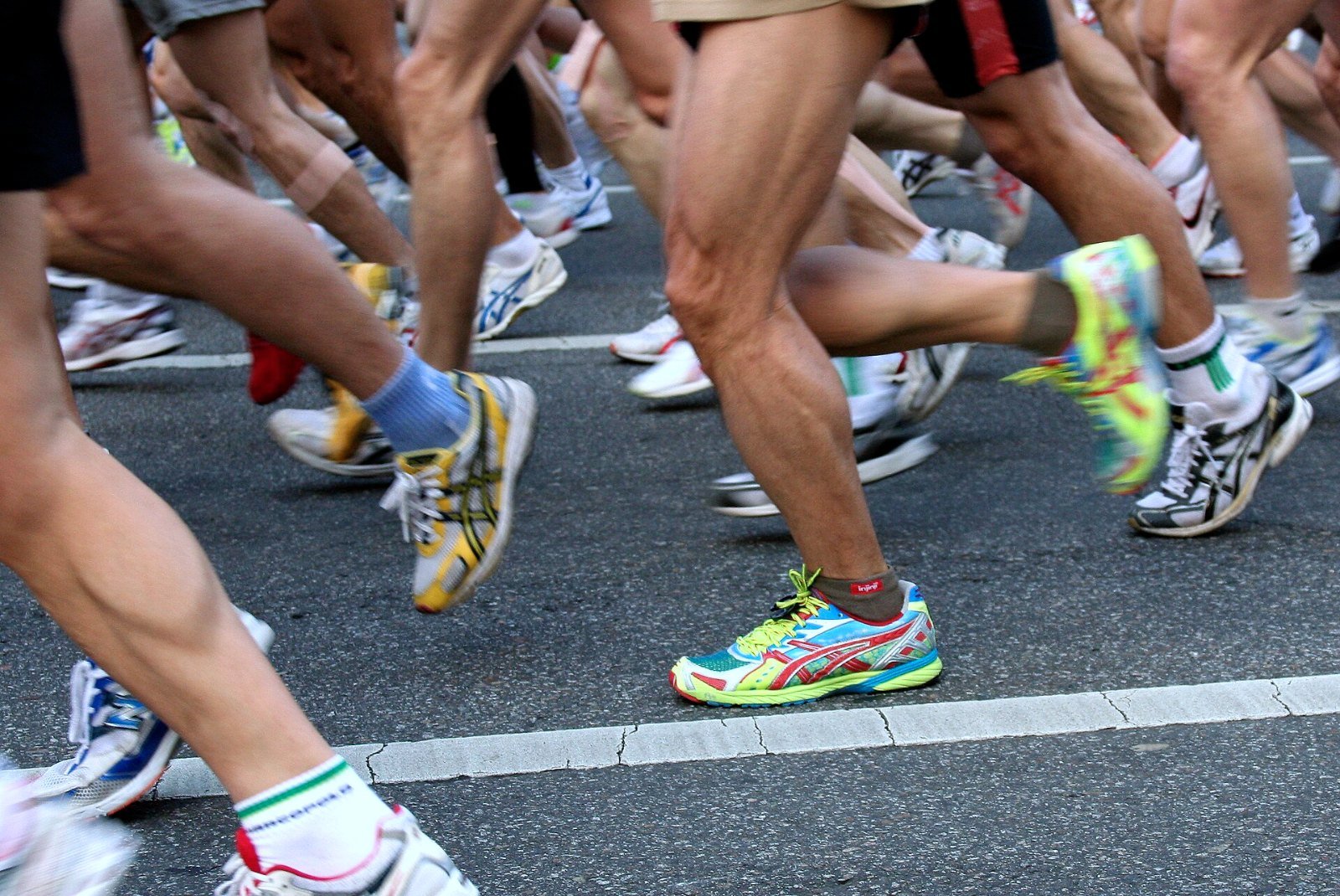
JTBC Seoul Marathon (November): The Lottery You Can Walk Around
Seoul’s autumn marathon crosses the Han River three times on a point-to-point course through the city centre — the only full marathon that cuts through downtown Seoul this way. Around 30,000 runners take part, and the weather is the best of any big Asian marathon: early November, cool and dry.
- When: First Sunday of November — November 1, 2026 (next edition expected in early November 2027)
- Distances: Full marathon and 10K only — no half
- Entry fee: Domestic ₩150,000 (~US$107) full / ₩100,000 (~US$71) 10K. Overseas entry via World’s Marathons was listed at US$150 full / US$120 10K for 2026 — expect similar when 2027 entry opens.
- How foreigners enter: Domestic entry on the Runable platform is a lottery (in 2026 it ran April 13–15). Overseas runners skip it and register through World’s Marathons, but the 2026 race is now closed to new entries (leftover overseas places are only occasionally released). No qualifying certificate is required.
- Cutoff: 5 hours full / 1 hour 20 minutes 10K. After the cutoff the roads reopen and remaining runners are collected by bus.
- Race pack: Collected in person before race day with your passport (at the expo in the days before the race — confirm the dates on the official site). Domestic runners get theirs shipped; you won’t.
One 2026 change to watch: the full marathon’s start moved from Sangam World Cup Park to Gwanghwamun Square (the finish stays at Olympic Park), while the 10K still starts in Sangam and finishes at Yeouido Park. Check which start your distance uses before booking a hotel — the two starts are on opposite sides of the river.
Busan Sea Marathon (October): The Bridge Start
No full marathon here — the Busan Sea Marathon trades distance for scenery, starting on the upper deck of Gwangalli Bridge, normally closed to pedestrians. Our Busan coastal routes guide covers the course ground in training terms; the race-day facts are these.
- When: Late October — October 25, 2026
- Distances: 15K (9.3 mi), 10K and 5K — about 12,000 runners, gathering at the BEXCO plaza in Centum City
- Entry fee: ₩70,000 (~US$50) for the 15K / ₩60,000 (~US$43) 10K / ₩50,000 (~US$36) 5K
- How foreigners enter: Entry is sold domestically in Korean and, in 2026, sold out within days. There is no separate overseas ballot to fall back on — treat the entry date like a concert-ticket drop and be online when it opens.
- Cutoff: The 15K starts on the bridge deck, so start-area timing is tightly marshalled — follow the posted gathering time, not the gun time.
Because there is no full marathon, this is the friendliest first Korean race: a spectacular 15K, a finish around Gwangalli Beach, and the rest of the day free for the city’s seafood markets and coastal walks.
Gyeongju International Marathon (October): The Easiest Paperwork
Gyeongju — the Silla-dynasty capital two hours from Seoul, an hour from Busan — runs its marathon past royal tombs and temple hills, and it is the one Korean major that courts foreign runners in their own language.
- When: Mid-October — October 17, 2026
- Distances: Full marathon, half marathon (21.1 km / 13.1 mi) and 10K, drawing roughly 20,000 runners
- Entry fee: Posted on the official site when entries open
- How foreigners enter: Through the English-language official site (en.gyeongjumarathon.com) — no separate agent, no domestic platform to decipher.
- Cutoff: 5 hours full / 2 hours 30 minutes half / 1 hour 30 minutes 10K
Pair it with the city itself: the race is the perfect excuse for the trip in our Gyeongju day trip guide — stay two nights instead of one, run in the morning, and spend the afternoon among the tombs you just raced past.

How Entry Works, Step by Step
- Pick your door. Seoul Marathon: the official overseas entry. JTBC: World’s Marathons. Gyeongju: the English official site. Busan Sea: the domestic site, the day entry opens.
- Match your names. Your entry name, your passport’s Romanised name and — for the Seoul Marathon — your qualifying certificate must agree exactly. This is the single most common paperwork failure.
- Respect the two clocks. Some races are lotteries (JTBC domestically), some are a sprint (Seoul’s domestic entry, Busan’s sellout). Overseas channels are calmer but have their own deadlines — Seoul’s record-submission window closed a full season before race day.
- Plan the expo trip. Bibs are collected in person, with your passport, in the days before the race. No proxy pickup, no race-day pickup. Land at least two days before the gun.
- Sort your entry into Korea, too. Race entry and immigration are separate systems — check whether you need a K-ETA or visa for your passport well before entry day, not after you’ve paid.
What to Wear, Race by Race
- March (Seoul Marathon): The coldest start of the four — expect roughly 3–10°C (37–50°F) at the 7:30–8:00 a.m. gun. Tights or shorts with a long-sleeve top, gloves, and a throwaway layer you can abandon at the start. It warms fast once the sun is up.
- October (Busan, Gyeongju): Peak autumn — mild, dry, roughly 10–18°C (50–64°F). Standard race kit, arm sleeves for the first half hour. The easiest weather of the year to race in.
- November (JTBC): Typically 6–12°C (43–54°F) and dry, with wind off the Han River as the one variable. A long-sleeve top over a singlet covers most runners; the bridge crossings are the chilly part.
Korean Race-Day Culture: What Surprises First-Timers
Records are serious business. Korean running runs on certificates. At the Seoul Marathon your submitted record decides your start group; everywhere, digital finisher certificates are issued as a matter of course and runners keep them like medals. Expect chip (net) timing and strict cutoffs — when the clock runs out, roads reopen and the sweep bus is not a metaphor.
Start and finish are rarely the same place. Three of these four races are point-to-point. Bag trucks carry your kit from start to finish, subway lines are the default way in (stations open early and fill with runners), and at JTBC in 2026 the full and 10K didn’t even share a start. Read your race’s logistics page twice: it is in the details — start venue, bag truck deadline, last train — that Korean races are won or lost before the gun.
The field is enormous and organised. Tens of thousands of runners, pace balloons marked in plain numerals, aid stations at disciplined intervals and volunteers everywhere. First-timers from smaller race scenes are usually struck by how calm it all feels at this scale.
Practical Info
- Help line
- 1330 Korea Travel HotlineEnglish, 24 hours
Show this in Korean
Tap Naver for walking directions: Google Maps in Korea shows places and transit routes but not walking directions yet.
FAQ
Can foreigners enter Korean marathons?
Yes. The Seoul Marathon runs a dedicated overseas entry, JTBC sells overseas places through World’s Marathons, and Gyeongju takes entries on an English-language official site. Busan’s Sea Marathon is entered domestically and sells out fast.
Do I need a qualifying time?
Only for the Seoul Marathon full course: a net-time certificate of 4:59:59 or faster from a race held between January 1, 2024 and November 30, 2026, in the exact Romanised name on your passport. JTBC, Busan and Gyeongju ask for no certificate — but their cutoffs (5 hours for both full marathons) are enforced.
Is entry a lottery or first-come, first-served?
Both exist, sometimes in the same race. JTBC’s domestic entry is a lottery, but its overseas channel sells while places last. The Seoul Marathon is first-come for everyone — overseas places simply last longer than the domestic ones.
Can someone else collect my race pack?
No. Collection is in person, with your passport, in the days before the race — and there is no race-day pickup. Build the expo into your itinerary and arrive at least two days early.
When should I book flights and hotels?
After your entry is confirmed, not before — entry windows open months ahead (Seoul’s overseas entry opened about six months out), which leaves plenty of time. Stay near your start line or a subway line that reaches it; point-to-point courses make the start, not the finish, the address that matters.
Racing here rewards a little homework: one certificate, one passport-matching name, one expo trip. Get those three right and Korea gives you back a Platinum-label city marathon, a bridge you can only cross on foot once a year, and autumn weather most race calendars would kill for. Train on the ground first with our Seoul routes and Busan routes guides — and if race-week shopping is on the list, our Korea tax refund guide explains how visitors claim 5–8% back on running gear bought in Korea.